Back-end
 Mobile App
 Quality Assurance
 DESIGN SERVICES
 FRONT-END
 Digital Marketing Services


 Digital Marketing Expert
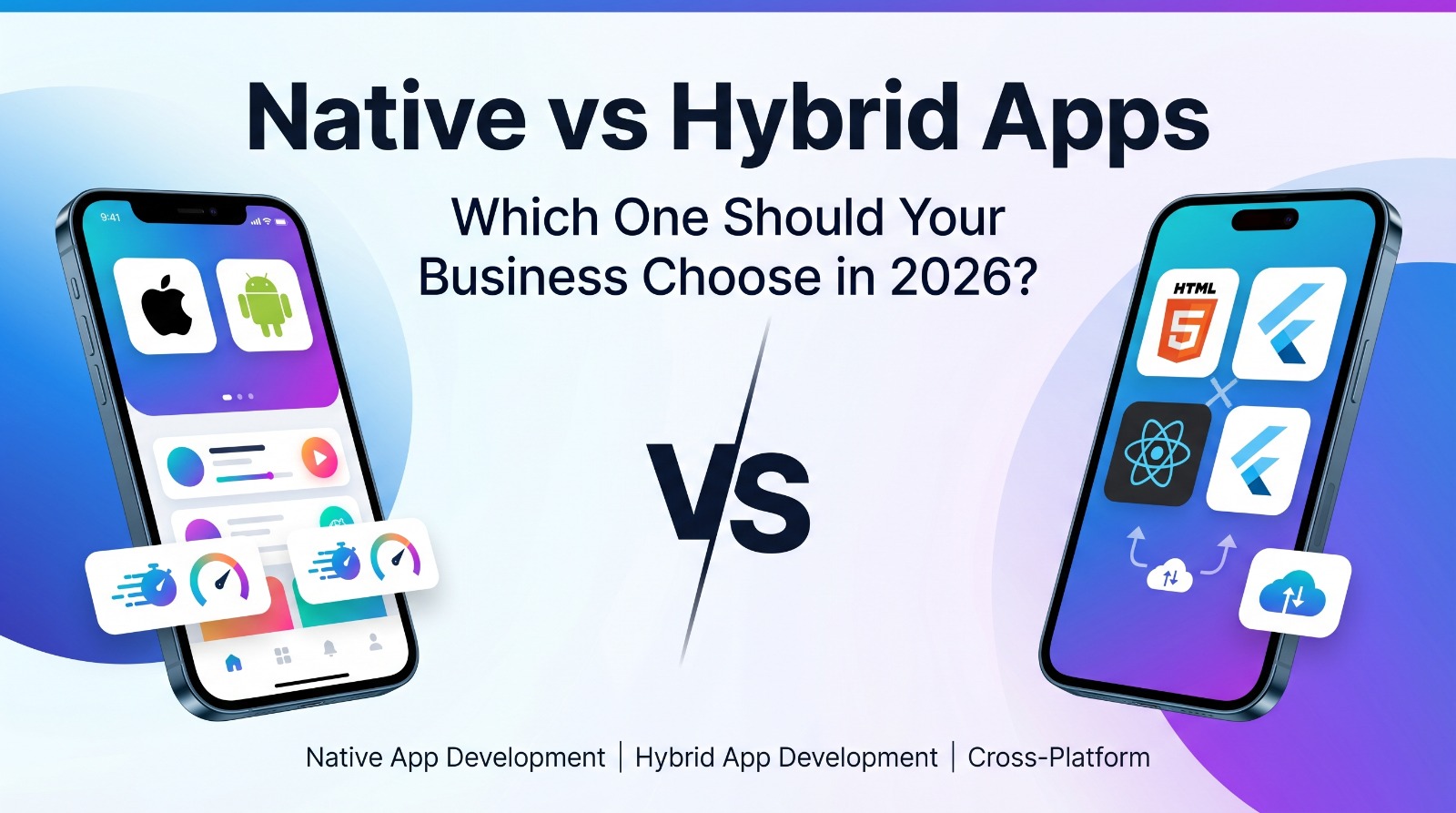
Native vs Hybrid Apps: Which One Should Your Business Choose in 2026?

By Ominfowave Team
Thursday, July 2, 2026
 560
560
Introduction
Native vs Hybrid Apps: Still stuck on what to choose for your business in 2026? While there is no best or worst when it comes to Native vs Hybrid Apps, both have their own strengths and benefits for building a cost-effective, secure, and feature-rich app that takes your business to the next level.
If you require a mobile app that works on both Android and iOS with separate codebases, delivers a seamless and superior user experience, and you're comfortable with a higher development cost, then Native App Development is the right choice. If you need an app that is scalable, cost-effective, and built using a single codebase, then Hybrid App Development is an excellent option.
What are Native Apps?
Native apps are built to run on a single operating system, either Android or iOS. They use programming languages such as Swift, Objective-C, Kotlin, and Java to deliver feature-rich applications with capabilities like camera access, GPS, biometric authentication, high performance, and fast loading speeds. Native apps provide smooth animations, an excellent user experience, and greater reliability. However, they require separate codebases for Android and iOS, increasing development time and costs.
What are Hybrid Apps?
Hybrid apps are developed using a single codebase and support cross-platform development. They are built using HTML5, CSS3, JavaScript, or frameworks such as Flutter and React Native. Instead of developing separate applications for each platform, developers can create one application that runs on both Android and iOS, saving time, cost, and development effort.
Differences Between Native and Hybrid Apps
The right choice depends on your development budget, performance expectations, user experience requirements, and device feature access. Native apps are optimized for a single platform and provide excellent UI/UX, while Hybrid apps use one codebase to support multiple platforms, reducing development costs and time.
| Feature | Native Apps | Hybrid Apps |
|---|---|---|
| Development | Built separately for Android and iOS. | Single codebase that runs on multiple platforms. |
| Programming Languages | Swift, Objective-C (iOS), Kotlin, Java (Android). | HTML, CSS, JavaScript, Flutter, React Native. |
| Performance | Highly responsive with exceptional speed. | Good performance but may struggle with complex tasks. |
| User Experience | Smooth, responsive, platform-specific. | Consistent but slightly less smooth for graphics-intensive apps. |
| Maintenance | Requires separate maintenance. | Easy to maintain due to one codebase. |
| Launch Time | Longer. | Faster. |
| Best For | Banking, Healthcare, Gaming, AR/VR, Performance-intensive apps. | Startups, MVPs, E-commerce, Booking apps, Business apps, Content-driven apps. |
Development Costs and Time: Which Should You Choose?
Before building a mobile application, businesses should consider two major factors: development cost and project timeline. Native apps provide superior performance and an outstanding user experience but require separate development for Android and iOS, leading to higher costs and longer timelines.
If you need a cost-effective application that works across multiple platforms with a single codebase, minimal maintenance, and faster development, Hybrid App Development is an ideal choice.
Estimated Development Costs
| App Complexity | Native App | Hybrid App |
|---|---|---|
| Basic App | ₹5–15 Lakh | ₹3–10 Lakh |
| Medium Complexity | ₹15–40 Lakh | ₹10–25 Lakh |
| Complex / Enterprise App | ₹40 Lakh–₹1 Crore+ | ₹25 Lakh–₹70 Lakh+ |
Note: These are estimated development costs and may vary depending on app size, features, integrations, design complexity, developer rates, and the location of the development team.
Real-life Examples of Native and Hybrid Apps
Native Apps
- Instagram is built separately for Android and iOS to deliver a fast and feature-rich experience.
- Spotify uses native development for smooth streaming and offline playback.
- Snapchat provides high-quality camera functionality, AR filters, and real-time messaging.
Hybrid Apps
- Discord uses React Native for cross-platform compatibility.
- Microsoft Teams delivers chat, meetings, notifications, and file sharing.
- Google Ads is built using Flutter for a consistent Android and iOS experience.
Native or Hybrid: Which Is the Better Choice for Your Business?
The best option depends on your business goals, budget, timeline, and target audience.
Performance Needs
If your application requires superior performance, advanced security, seamless animations, full device access, and better integration, Native App Development is the ideal solution.
Cost & Timeline
If you need a cost-effective application with faster development and deployment across Android and iOS, Hybrid App Development is the better choice due to its single codebase.
Maintenance & Support
Native apps require separate maintenance for Android and iOS. Hybrid apps require only one codebase, making updates and maintenance much simpler and more affordable.
User Interface
Native apps deliver a highly responsive, intuitive interface with smooth animations. Hybrid apps may not match native performance in graphics-intensive scenarios but still provide a consistent user experience with faster development.
Conclusion
Choosing between Native and Hybrid Mobile App Development is an important business decision. If you need exceptional performance, advanced features, and the best user experience, Native App Development is the ideal solution. If your priority is lower development cost, faster launch, and cross-platform compatibility, Hybrid App Development is the better option. If you're planning to build a Native or Hybrid application, contact Ominfowave, a trusted Mobile App Development Services provider, to bring your app idea to life.
Recent Posts
- WordPress vs Custom Development: What Should Your Business Website Use?
- Website Redesign Checklist: 12 Signs Your Website Needs a Makeover
- How Fast Website Speed Impacts SEO and Conversions
- AI-Powered Test Automation: Catching Bugs Before They Ship in 2026.
- How Much Does It Cost to Build a Mobile App for a Startup in 2026?
- Hire Dedicated Developers in 2026: The Smart Business Guide to Scaling Faster & Smarter
- ReactJS vs Other Frameworks in 2026: Why Businesses Still Prefer React
- The Importance of Humans in SEO Today